The Prologue
So far these field notes have been about the scaffolding of writing a novel — the archives, the registers, the long chase after a name. Today I want to share something from inside the walls instead. This is the prologue to When We Were Apart: the first pages, more or less as a reader will meet them.
It moves across three moments and a century and a half — a body caught in the roots of the Mississippi River in 1866, a fragile school catalogue opened in a New Orleans reading room in 2018, and a father met at an airport with news he was not entirely ready to hear — a spelling of a name that doesn't quite match, a place no one was expected to be, a secret the documentary record gives up only halfway. The prologue doesn't try to explain the family at the center of this novel. It only opens the door.
A note before you begin: this family is fictional, but it is built around real institutions, real places, and — in a few cases — real names drawn from the historical record. Where the story touches documented history, I have tried to stay faithful to it. Where it invents, I have tried to invent responsibly, in the space history leaves open.
Get it right.
Make them hear so I won’t be lost to time.
My blood runs through your veins.
You are my portion, my destiny, and my promise.
Tell my story.
Open their eyes that they may see. Open their ears so they may hear. Open your mouth and speak.
The truth will come out.
The River Remembers
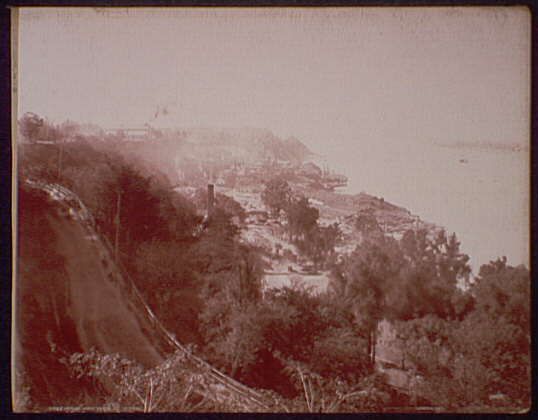
The river moved like a slow exhale, brown and wide and older than memory. It curled through the farmlands in bends that seemed gentle until you stepped into the water and felt the pull of the current boiling beneath the stillness. Along its banks, the river birch branches dipped into the water, their fresh spring leaves stirring in no particular direction. Driftwood left behind by the spring flood rested high in the roots where the river had only recently begun to fall. The damp heat pressed low against the ground, thick with the smell of mud and river grass.
The Mississippi did not hurry.
It didn’t need to.
It had carried canoes and steamships, escaped souls and stolen bodies, sugar barrels and sermons and rumors of war. Now it carried soldiers home, teachers south, Bureau agents with satchels full of contracts and reports, and steamboats loaded with freight. It carried hope and grief with equal patience.
Some mornings it gleamed gold. Other days it glared back gray and flat as hammered pewter. This morning, it was quiet. And then the river offered up one of its secrets.
Trapped in the underwater roots where the bank sloped sharply into shadow, a man’s body swayed gently with the current — limbs caught like cloth in a thorn bush. His face was turned away, his hair floating loose in the silt-clouded water. One boot was missing. His faded blue army coat had been torn open at the side, the white cotton of his shirt fluttering with the river’s breath. His leather satchel trailed open in the water, its contents slowly slipping into the current.
A folded labor contract. An official transportation order bearing the seal of the Bureau of Refugees, Freedmen, and Abandoned Lands. A packet of correspondence tied neatly with faded blue ribbon. A leather memorandum book, swollen with river water.
The current teased them free one by one.
Some caught in the roots beside him.
Most slipped silently downstream.
He had been there for some time. The body rocked, barely moving, as if the water hadn’t finished letting go.
Tilton Memorial Hall, Tulane University
The oaks on the quad were older than anything I had come to find. They dripped their long gray beards of moss over the walkways like they’d seen this before — girls with backpacks and legal pads, walking too fast toward a building that would not hurry for anyone.
Tilton Hall sat back from the street a little, brick and quiet. I’d read about the Amistad Research Center online a dozen times before I ever got in a car — the AMA’s records, the oldest independent archive of its kind in the country, everything that was left of the schools built for people who weren’t supposed to be able to read at all.
Somewhere in those boxes, if I was right, was Straight University. And if I was right about that, there was a chance — thin, but a chance — that somewhere in those boxes was her.
I signed in at the desk. A woman with reading glasses pushed up into gray curls took my request slip without looking at it twice — catalogues came through here often enough, I supposed, for family historians chasing down grandmothers and great-uncles, all of us hoping the same quiet hope. “Give me a few minutes,” she said. “We’ll get it up from the stacks.”
I sat at a long table under a window. My hands wouldn’t stay still. I kept thinking about my father’s face at the last dead end — Natchez, the churches, the county records, all of it a wall with no door in it. We had been so sure she’d stayed on that side of the river. We had been wrong about so many things.
The box, when it came, was smaller than I expected. Gray, acid-free, tied with a cotton tape gone soft with handling. The archivist set it down like it might complain if she wasn’t careful, and maybe it would have. “No gloves needed for paper — just clean hands,” she said. “Pencils only at the table. And this one’s very fragile — the binding’s original, so go slow.”
I went slow.
The catalogue was thinner than a magazine, its cover the color of weak tea, foxed at the corners where a hundred years of hands had opened it exactly the way mine were opening it now. On the flyleaf, in a spidery, confident hand, someone had written: Gift of Prof. Henry W. Longfellow, of Cambridge, 1877. I sat with that for a second — someone in Massachusetts had cared enough about this small school in New Orleans to send his copy south, or maybe north, into whatever collection eventually found its way here. A whole invisible chain of people keeping a thing alive without knowing why, the same as I was.
I turned the pages carefully. Faculty lists. Departments — Theological, Law, Normal, Commercial, Academical, Elementary, Medical, Collegiate — the ambitions of the place laid out like a cathedral built out of air. And then, near the back, under the Elementary Department, a column of names in small, tight type, students and the neighborhoods or roads that had sent them.
I almost missed it. I was moving too fast, the way you do when you’ve been disappointed enough times that you stop letting yourself hope. But there it was, plain as anything, between two names that meant nothing to me:
| Stewart, Artemisia | New Orleans, La. | |
| Stewart, Dewitt | New Orleans, La. |
Not Artimese. Artemisia. The spelling my family had carried — worn smooth over generations of telling, the way water wears a stone round — wasn’t the spelling on the page in front of me. And for one unsteady second that felt like losing her all over again, until I understood, sitting there in that hushed room, that this was exactly what finding someone in the record actually looks like: not a clean match, but a crack in the wall where the truth had been distorting itself just slightly, year after year, mouth to mouth, until it came out the other side almost — but not quite — the name we’d been saying all along.
Dewitt. Her brother, I assumed. I hadn’t even been looking for him. He’d just been standing there next to her the whole time, the way brothers do, waiting for someone to finally turn the page far enough to notice.
I don’t know how long I sat there. Long enough that the light through the window had moved a little. Long enough that the archivist came by once, quietly, to ask if I needed anything, and I must have said no, because she left me alone with it.
I took a photograph of the page with my phone, my hand not quite steady enough for it to come out square. Then I took another, just in case. I thought about my father in his study in Houston, the way he’d go still and quiet whenever we found something real, like he was listening for a voice underneath the paper. I thought about all the years he’d spent looking in Natchez for a girl who had already crossed the river a hundred and forty years before either of us was born.
I didn’t call him. Some things you don’t say over a phone. And I wanted to see his face when I told him. I closed the catalogue as gently as I’d opened it, thanked the archivist, and walked back out under the oaks into the ordinary brightness of the afternoon, already looking up flights to Atlanta on my phone.
Atlanta Hartsfield-Jackson Airport
Waiting for my father at the Atlanta airport always made me think of the opening scene in the movie Love, Actually, where the narrator reflects on how the arrivals gate at Heathrow proves to him that love is everywhere. I’d always loved that scene and felt the same.
He’d flown in from Houston a day ahead of Mom and my brother, who’d fly in Friday for the ceremony itself. Waiting for him at baggage claim, I scanned the faces coming up the escalator. Businessmen with weary eyes, college kids carrying backpacks, grandparents greeted by eager grandchildren. And then, finally, there he was.
James Crawford.
His gaze swept the crowd, sharp and searching, until he saw me. Then, as always, he composed himself. I smiled at him.
“I found her, Dad.”
Even before he asked who, I watched something in him loosen — that unguarded half-second of hope he wore, the one I’d spent half my life trying to put there. I’d wanted this moment for so long I’d practiced saying it in my head on the plane, tried out three different ways of telling him, settled on plain and unadorned because I thought that was the version that would make him proudest.
His brow furrowed. “Who?”
“Artimese. In 1876. In New Orleans. We were looking in the wrong place — she wasn’t in Natchez at all. I found her enrolled at Straight University. And that’s not all — she’s with who I think is her younger brother, Dewitt Stewart.”
For just a moment, something crossed his face that I couldn’t quite name — not disappointment, exactly, and not disbelief. More like a door swinging half-shut on a room he’d expected to walk straight into. It was there and then it wasn’t, gone before I could decide whether I’d actually seen it or only imagined it in the fluorescent wash of the baggage claim.
“Straight University,” he repeated, like he was turning the words over to check their weight. A beat too long. Then, “Huh.”
“Isn’t that incredible? After all these years?” I was talking too fast now, filling the silence the way I always did when I wanted him to feel exactly as lit up as I felt, offering it all up at once — the catalogue, the Longfellow inscription, the spelling that didn’t quite match what we’d always said. Anything to get his face back to where it had been half a second earlier.
“Seriously? After all these years? In New Orleans?”
And there he was again — warm, delighted, asking all the right questions — and I let myself believe I’d made the whole thing up.
I nodded.
My father and I had been amateur genealogists for decades. Some of my fondest childhood memories involved digging through courthouse records, scrolling through microfilm, learning to decipher the script of long-dead census takers.
I’d just finished defending my Ph.D. at Georgia Tech and was due to accept a faculty position in the fall. Dad had come to Atlanta ahead of the rest of the family to join me in celebrating the final chapter of what had been a long, long road. But arguably, finding Artimese was the bigger news.
We had been searching for Artimese for years. And I had finally found her. Just not where I thought I would. We didn’t talk about it again until we were in the car, merging onto the highway, the skyline going gold in the side mirror the way it does at that hour.
The rest of the drive, I thought about the two names on that 1876 roster — a girl and a boy who had existed, for one clerk’s afternoon, as nothing more than ink in a ledger column, headed toward lives no catalogue entry could hold. I wanted, suddenly and fiercely, to know who had sent them to that school. What home they’d been sent away from. And why.
It would take me years to find out. And it started, as these things always seem to, much further back than I expected — not in New Orleans at all, but on a stretch of leased land on the Louisiana side of the river, in the year after the Civil War, in a country that hadn’t yet finished deciding what freedom was going to mean for those who had survived the war.